
“He went up the mountain and called to himself those whom he wanted, and they came to him. He appointed twelve—whom he also named apostles—that they might be with him and he might send them out to preach.”
(Mk 3:13-14)
Valuable Partnerships
During a recent trip to Luxembourg, I had the opportunity to speak with a Scalabrinian Missionary. Among the various topics discussed was that of partnerships, starting from the relationship with those who share our mission and commit to achieving common goals with us.
In the nonprofit sector, there is often a tendency to think that the more relationships we activate, the more networks we build, the more stakeholders we involve, the more the project seems able to grow. In our dialogue, however, the Missionary expressed a concept that gave me pause to reflect on the real value of partnerships.
“We don’t need everyone to stay by our side. Jesus chose only twelve.”
Truly a valuable insight that contains a profound reflection worth dwelling on. What if the problem were not how many partnerships we build, but how we choose them?
The Misconception of Quantity
In the nonprofit sector, building relationships is fundamental. This is indeed the foundation for the realization and sustainability of projects themselves. One might mistakenly think, however, that a greater number of partnerships could guarantee greater impact. This aspect is certainly partly true, but only up to a certain point.
Each partnership is not only an opportunity, but also a great responsibility. Building a partnership of value requires time, attention, alignment, and care. And when relationships increase without real shared quality, something happens that you may also recognize: meetings, gatherings, and initiatives multiply, but there is a risk of reducing “depth.”
Energy becomes distributed, focus weakens, and relationships become more formal than real. It is not a problem of “too many partnerships” in an absolute sense; rather, it is a problem of partnerships not truly chosen.
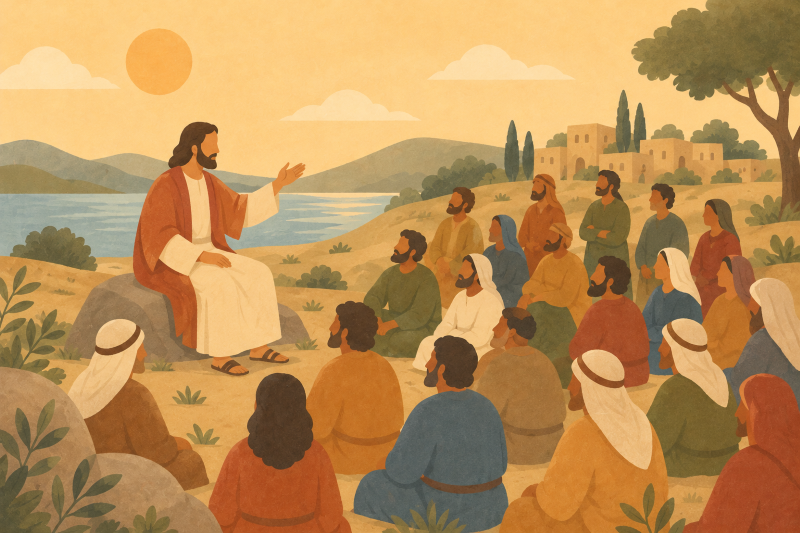
The Gospel tells us of a very essential passage in which Jesus chose twelve apostles, “only” twelve. Among the many people who followed him, he identified a small group with whom to build something deeper. It is not a logic of exclusion—the twelve yes, and all the others no. Rather, it is a logic of intentionality.
Not everyone is called to do everything. Not all relationships are called to have the same level of involvement, and above all, strength does not come from the quantity of connections, but from the quality of certain key relationships.
When a Partnership Is Truly Such
Often the word “partnership” is used to indicate very different things. Sometimes a collaboration on a single project, other times a sharing of visibility, still other times it is simply a “cordial” relationship between organizations. These are all useful things, and often necessary. But they are not all partnerships in the same sense.
A partnership, one that truly generates value, has something deeper: it is a relationship that is built over time, in which there is a real convergence of objectives, mutual trust, and a willingness to share even the weight of decisions.
It is not just “doing something together”, it is carrying a responsibility together and this type of relationship cannot be multiplied infinitely.
Here lies perhaps the most delicate point. In the nonprofit sector, there is a tendency to be inclusive by nature. To open up, to welcome, not to exclude, and this certainly represents a great value.
But when it comes to building partnership, this same openness can become more challenging at the moment of choice. Because choosing also means not pursuing certain relationships. It means recognizing that not all can have the same space. It means, at times, saying “no”. Yet, it is precisely here that the quality of the work is at stake.
The partnerships most fragile do not arise from bad intentions. They arise from relationships initiated without real alignment, without a shared vision, without a concrete ability to walk together. And over time, this translates into projects that struggle, dispersed energy, and misaligned expectations.

An Open Question
Perhaps the most concrete meaning of the insight I received in Luxembourg is precisely this. It is not about reducing relationships. It is about distinguishing them. Just as in our lives, in our work there are different relationships. Some broad, light relationships, important for creating context, dialogue, and openness. And then there are closer, more demanding, more challenging relationships. It is these latter ones that, over time, truly generate change.
Jesus did not build a system of indistinct relationships. He built a core, a group with whom to share time, trust, and responsibility, and from there everything else began.
Perhaps, then, the question to ask is not how many partnerships we are building, but whether we are recognizing, and choosing, those that can truly become generative. Those that do not merely collaborate, but are willing to walk together over time.
Our “twelve” partnerships, after all, are not just a number. They are a choice.